

Outdoor adventures play an important role in youth group programmes, particularly during residential trips and extended stays away from home. While these activities are often chosen because they’re exciting and memorable, their real value lies in what they help young people develop along the way.
For many young people, youth group residentials provide their first opportunity to step outside familiar routines, work closely with new peers and try activities they may not encounter in everyday life. Outdoor activities create the right environment for this growth, offering challenge without pressure and encouragement without judgement.
Whether you’re planning a residential for a youth club, trust or uniformed organisation, adventurous activities can support confidence, wellbeing, teamwork and personal development, all while keeping young people fully engaged.
This guide explores a range of outdoor adventures commonly offered to youth groups, explaining what each involves and why they’re so effective.
Popular outdoor adventure activities for youth groups
Well-designed outdoor adventure activities are inclusive by nature. They are structured to suit a range of abilities, confidence levels and learning styles, ensuring everyone can take part and feel supported.
Crucially, these activities are usually led by trained instructors who focus on safety, encouragement and participation. This allows young people to push themselves just outside their comfort zone, knowing help and guidance are always close at hand.
Aeroball/ Airball
Aeroball, sometimes referred to as Airball, is a fast-paced, high-energy activity that combines trampolining with elements of basketball and volleyball. Each participant has their own trampoline and works either individually or as part of a team to score points by aiming the ball into an opposing net.
What makes Aeroball particularly effective for youth groups is that it feels instantly exciting while remaining accessible to all abilities. Because it’s unfamiliar to most participants, there’s no advantage for those who regularly play traditional sports.
Aeroball supports youth development by:
- Encouraging physical activity in a way that feels playful rather than competitive, helping young people stay active without the pressure that can sometimes come with team sports
- Improving balance, coordination and spatial awareness as participants learn to control their movement while bouncing and reacting quickly to the game
- Building confidence through quick progress, as young people often improve rapidly once they understand the basics of timing and positioning
- Creating a shared group experience that encourages communication, laughter and teamwork, helping break down social barriers within the group
For many youth groups, Aeroball becomes a highlight because it combines laughter, movement and teamwork without putting pressure on performance.
Survivor style challenges
Survivor-style activities immerse young people in outdoor problem-solving scenarios that require teamwork, creativity and adaptability. Working in small groups, participants are typically tasked with building shelters, planning layouts and making decisions based on environmental conditions and available resources.
These activities are particularly valuable because success doesn’t depend on speed or strength. Instead, young people must communicate clearly, listen to different viewpoints and agree on a shared plan.
Survivor-style challenges help young people:
- Develop teamwork and leadership skills, as roles naturally emerge and participants learn when to lead, listen or compromise
- Learn practical outdoor concepts, such as basic navigation, shelter design and how weather conditions influence decision-making
- Build resilience, adapting plans when materials don’t work as expected or conditions change
- Gain confidence by contributing ideas, especially for young people who may not usually speak up in group settings
These sessions often reveal strengths that aren’t always visible in classroom or sporting settings, helping young people recognise their own value within a team.
Treetop and high ropes adventures
Treetop and high-ropes activities allow young people to challenge themselves at height in a carefully controlled and supportive environment. Participants navigate obstacles such as rope bridges, platforms and balance elements, choosing how far they want to push themselves.
A key strength of these activities is flexibility. Participants can start at a level that feels manageable and gradually progress if they choose to, making them suitable for mixed-confidence groups.
The benefits include:
- Building confidence through personal challenge, as young people focus on their own progress rather than comparing themselves to others
- Encouraging peer support and reassurance, with group members motivating each other through difficult moments
- Developing balance, coordination and concentration, especially as obstacles become more complex
- Helping young people face fears safely, allowing them to experience achievement without being forced beyond their limits
For many young people, completing a high-ropes challenge becomes a defining moment of a residential experience, often leading to a noticeable boost in self-belief.
Axe throwing
Axe throwing is a surprisingly focused and skill-based activity that requires patience, control and concentration. Participants aim for a target while learning how grip, stance and release affect accuracy.
Unlike fast-paced team games, axe throwing encourages young people to slow down and reflect on their technique. Progress tends to be gradual, which helps reinforce persistence and self-control.
For youth groups, axe throwing supports:
- Hand-eye coordination and fine motor skills, as small adjustments in movement can make a noticeable difference
- Focus and emotional regulation, helping young people stay calm and composed when things don’t go to plan
- Confidence through visible improvement, as participants can clearly see progress over time
- Safe risk-taking, allowing young people to try something new under close supervision and clear safety guidance
This activity often appeals to young people who enjoy measurable progress and personal challenge rather than competition.
Fencing
Fencing introduces young people to a structured sport that combines physical skill with strategy and quick thinking. Participants learn the basics of footwork, attack and defence, alongside clear rules and safety procedures.
Because fencing is unfamiliar to most young people, it creates a level playing field where everyone learns together. The emphasis on respect and control also makes it a valuable learning experience beyond physical movement.
Fencing helps young people develop:
- Reaction speed and decision-making, as they learn to anticipate and respond quickly to opponents
- Coordination, agility and balance, particularly through controlled footwork and positioning
- Respect for rules and opponents, reinforcing fair play and mutual understanding
- Confidence through mastering a technical skill, which can be especially rewarding for young people who enjoy structured learning
For youth groups, fencing offers a blend of physical challenge and mental engagement that keeps participants focused and motivated.
Orienteering
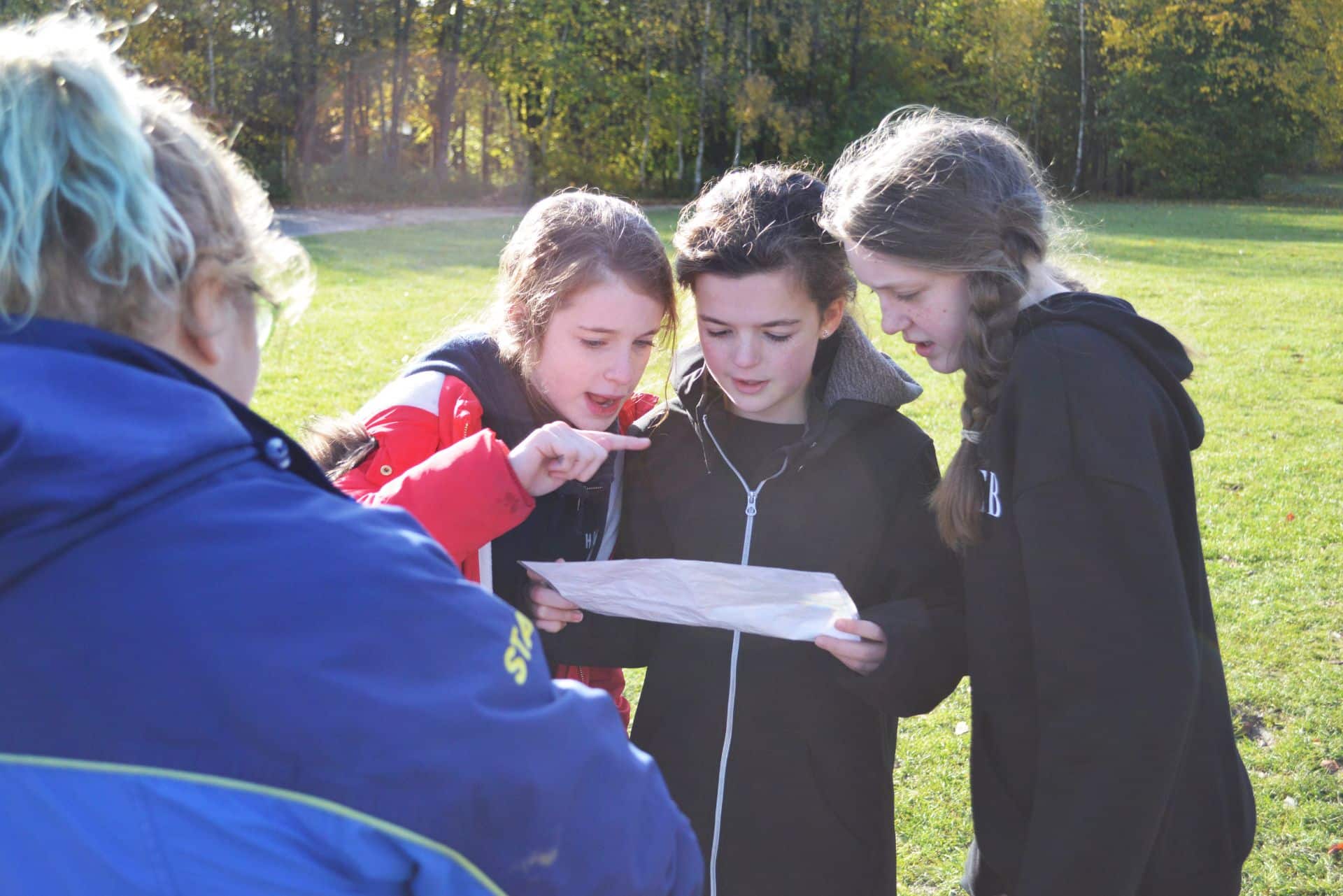
Orienteering combines navigation, teamwork and physical activity. Working in small groups, participants use maps to locate control points around a site, deciding together which routes to take and how to manage their time.
Unlike simple races, orienteering rewards planning and communication as much as speed. Groups must agree on decisions and support each other throughout the task.
Orienteering helps youth groups:
- Develop map-reading and navigation skills, encouraging spatial awareness and practical problem-solving
- Practise leadership and shared decision-making, as groups balance different opinions and strategies
- Strengthen communication and cooperation, particularly under time pressure
- Build independence and responsibility, with young people managing their own progress through the course
It’s particularly effective for encouraging young people to think strategically while staying active and engaged.
Why outdoor adventure activities are so valuable for youth groups
Outdoor adventure activities offer young people experiences they may not access in everyday life. Being away from familiar environments allows them to explore new roles, test their independence and build stronger connections with others.
Across a residential experience, adventurous activities can help young people:
- Build confidence by overcoming challenges, especially when they achieve something they initially doubted they could do
- Strengthen friendships through shared experiences, creating memories that bring groups closer together
- Support physical and mental wellbeing, combining movement, outdoor time and positive social interaction
- Develop problem-solving, leadership and resilience, skills that are transferable to school, work and everyday life
Importantly, these benefits often extend beyond the residential itself, supporting young people in their wider lives and ongoing youth group involvement.
Book your Youth Group adventure with PGL!
We hope these outdoor adventures sound like something your youth group will enjoy! If you’re not already heading on a Youth Club & Trust residential with PGL, then take a look at what we have to offer. We have a range of group residential trips to choose from, including Girlguiding residentials, Scout residentials, Other Uniform residentials and many more!
If you have any questions, get in touch with our friendly and experienced team today. They’ll be more than happy to help!