

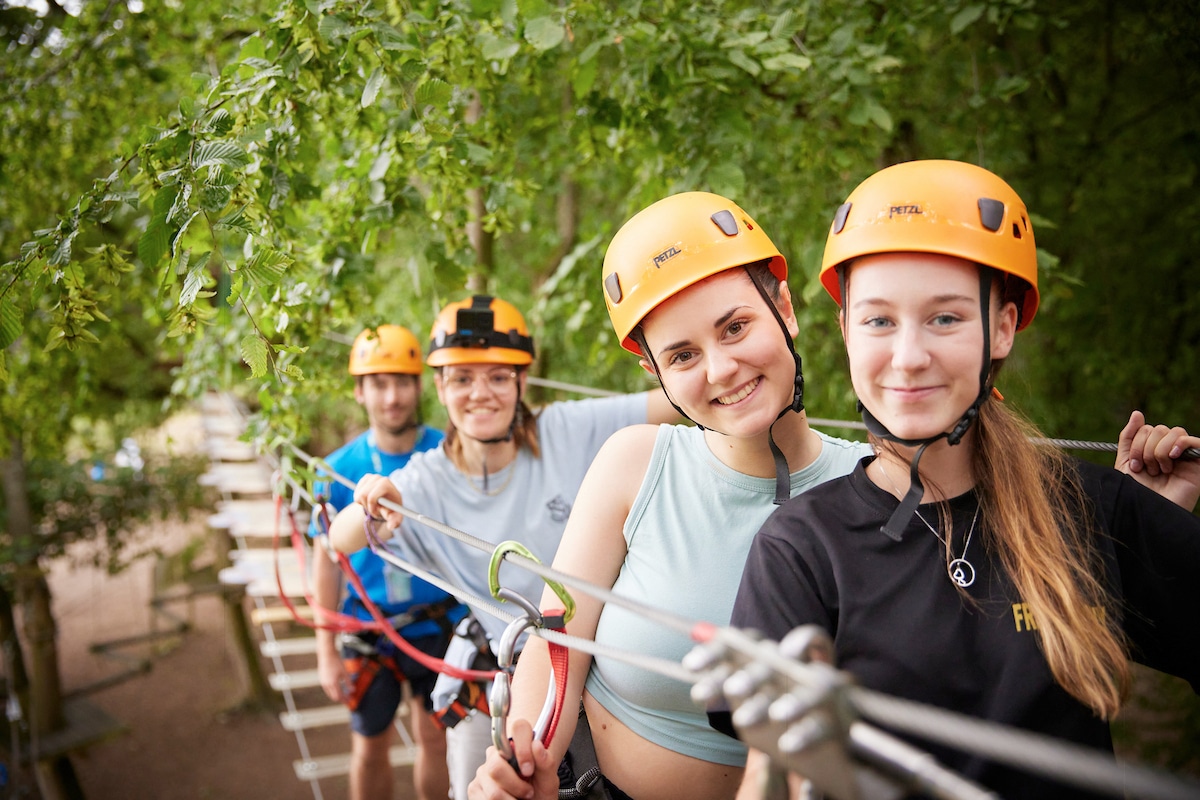
We’ve all seen it, that one moment on a school trip where a student who usually sits at the back of the class suddenly steps up to lead the team.
Residential trips are often the “gold star” memories of school life. But beyond the campfire stories and the adrenaline of the zip wire, these trips offer students a chance to grow in ways that simply aren’t possible within four classroom walls. A few days away from the usual school bells encourages self-discovery, independence, and teamwork, all while making learning feel like a real-world adventure.
During the whirlwind of secondary school, students are navigating everything from exam pressure to complex social lives. Secondary school residential trips create a space where they can explore new challenges and strengthen friendships in a supportive environment. For teachers, it’s a unique chance to see your students shine in a completely different light.
At PGL, we design trips that perfectly balance adventure, learning, and wellbeing. Below, we’ll dive into why these experiences are so game-changing for students.
Why residential trips matter
A great school trip is so much more than just a break from lessons; it’s a carefully crafted experience that blends education with personal growth. For secondary students, the timing is everything. They are at an age where they are forming their own opinions and testing their independence. Secondary school residential trips provide a safe, controlled “home away from home” where students can take risks and learn from their experiences with their peers by their side.
Key Ways Residential Trips Support Learning
- Bringing the curriculum to life – There’s something magical about seeing a textbook concept happen in real time. Physics becomes tangible when you’re calculating forces on a climbing wall, and ecology lessons feel “real” when you’re elbow-deep in a river study. Students are much more likely to remember a lesson when they’ve lived it.
- The “big win” of personal responsibility – Managing your own kit, your own time, and your own behaviour away from home is a massive leap toward adulthood. Simple tasks, like remembering the right gear for an activity or sticking to a schedule, help develop the kind of self-discipline that carries right back into their revision and homework habits.
- Building bridges between students and teachers – Shared adventures have a way of breaking down the formal barriers of the classroom. Students get to see their teachers as approachable mentors, and teachers get a front-row seat to their students’ hidden strengths. This mutual respect often transforms the atmosphere in the classroom once everyone is back at school.
Top Benefits of Secondary School Trips
Every student walks away with their own “highlight reel,” but the benefits of secondary school trips are consistently felt across the board. Here is how these experiences truly make a difference:
1. Building Confidence and Independence
Confidence isn’t something you’re born with; it’s a muscle that grows through trying new things. Whether it’s conquering a fear of heights on the high ropes or volunteering to lead a small group, these moments of “I did it!” stay with a student forever. You’ll often find that even the quietest students return to class with a much stronger voice.
2. Strengthening Teamwork and Communication
While group work happens in the classroom, a residential trip immerses students in challenges where they have to cooperate. Whether they are building a raft that actually needs to float or navigating a survival task, they learn to listen, lead, and support one another in a way that’s impossible to replicate at a desk.
3. Supporting Wellbeing and Resilience
Secondary school can be a pressure cooker. Getting away from screens and into the fresh air is a vital “reset button” for mental health. By facing manageable challenges, like the nerves before a big climb, students develop a “growth mindset.” They learn that mistakes are just part of the journey, helping them handle exam stress with much more resilience.
4. Enhancing Classroom Relationships
Away from the usual social hierarchies, new friendships bloom. We love seeing cliques break down as students from different social groups find common ground. This improved sense of “we’re all in this together” makes for a much more inclusive and happy classroom culture.
5. Encouraging Real-World Learning
Learning is always more effective when you can see the “why” behind it. Whether it’s geography fieldwork or history coming to life at a heritage site, these trips spark a curiosity that textbooks alone sometimes struggle to reach. It’s about building the critical thinking and creativity that they’ll need for the rest of their lives.
Examples of PGL Residential Trips That Support Development
Our programmes are built to be as flexible as you need them to be, ensuring every student gets the most out of their stay.
- Multi-Activity Programmes: Packed with challenges like zip wires and climbing towers, these are perfect for building pure grit and celebrating success as a team.
- Team-Building Sessions: Using our REACH UNITE programme, we focus heavily on trust and cohesion, helping groups become a supportive unit.
- Outdoor and Water Sports: Canoeing and abseiling are brilliant for teaching determination and showing students they are capable of more than they thought.
- Subject-Linked Trips: From Geography to Maths, we bring the curriculum outdoors with practical, hands-on investigations.
Take Your Students on a Life-Changing School Trip
PGL secondary school residential trips offer adventure while building confidence, resilience, teamwork, and real-world skills. Your students will return to school equipped with personal growth, stronger relationships, and practical abilities that last a lifetime.
Taking students beyond the classroom can unlock their potential while supporting holistic education. Contact us today to learn more about our secondary school residential trips and give your students an experience they will remember for years to come.