

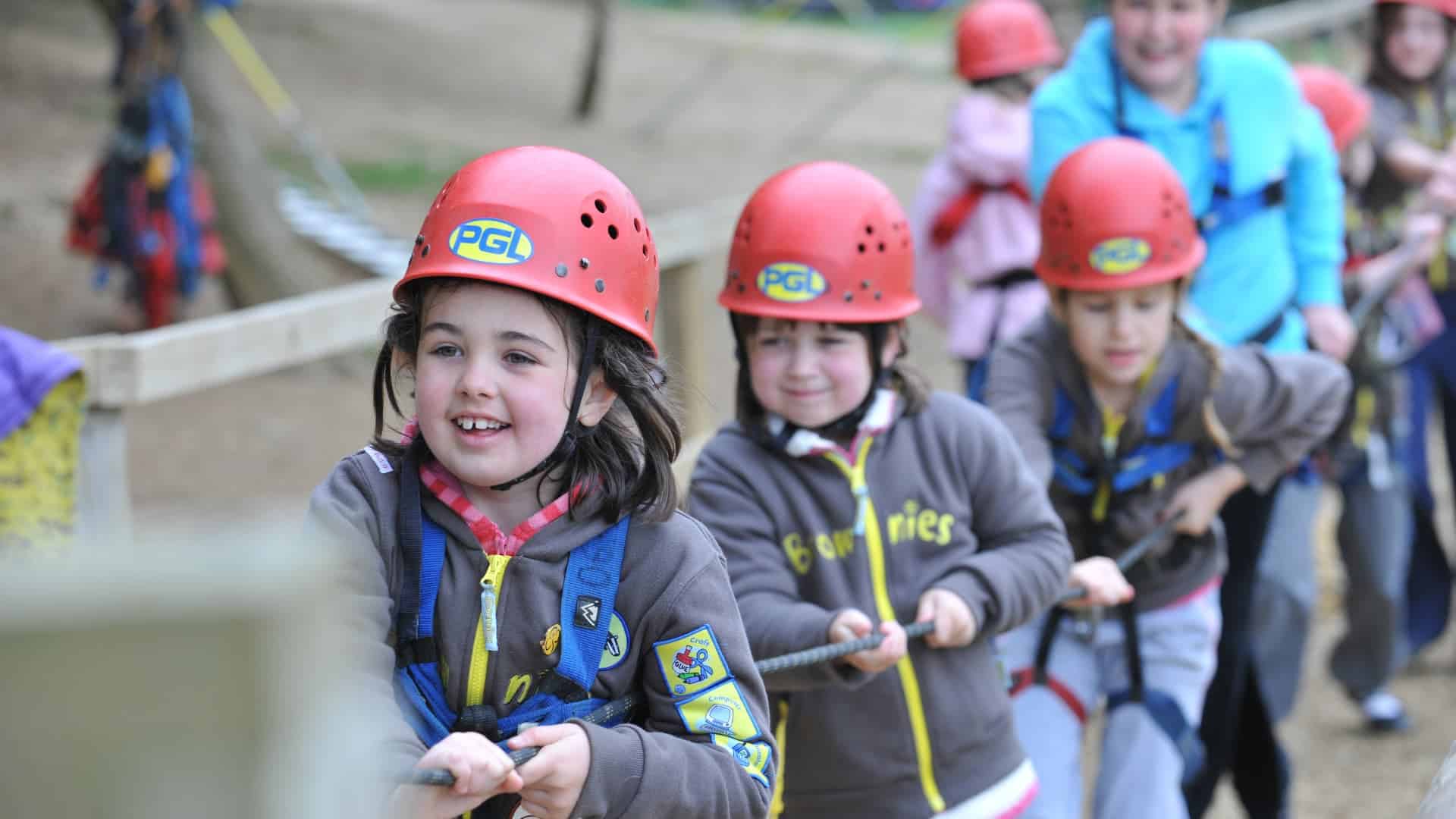
Group adventures and time outdoors are more than just fresh air and fun. For young people, they can be powerful opportunities for growth, independence and real-world learning.
Whether it’s a weekend residential, a summer camp for a group trip away, structured outdoor experiences help young people develop essential life skills that stay with them long after they return home.
For youth leaders, trustees and volunteers, that means outdoor trips aren’t just a reward or treat, they are an investment in confidence, resilience and social development.
Below, we explore the key skills young people gain from group adventures and outdoor experiences, and why they matter more than ever.
Confidence and Self-Belief
One of the most noticeable changes during a residential or outdoor adventure is confidence. Going on a PGL group adventure can help young people do the following:
- Try a new activity for the first time
Whether it’s archery, paddleboarding or climbing, doing something completely unfamiliar helps them realise they’re capable of more than they thought. Even just turning up and giving it a go is a step forward. - Step outside their comfort zone
That might mean volunteering to go first, attempting a higher level on a ropes course, or speaking in front of their peers. The stretch itself builds confidence, even if the outcome isn’t perfect. - Overcome a fear
Facing fears in a supported environment such as heights, being away from home or being in water, helps reframe them from barriers into challenges they can manage. - Achieve something they didn’t think they could
Reaching the top of a climbing wall or completing a timed team challenge can completely shift self-perception. “I can’t” quickly becomes “I did.”
When young people have confidence and believe in themselves, they begin to harbour self-trust and feel like they can achieve anything.
Outdoor adventures are so effective because they remove young people from their usual routines and social dynamics. In a new setting, they often discover strengths that don’t always show up in a classroom or youth club hall.
Communication and Teamwork
Group adventures naturally require collaboration. Through these experiences, young people learn to listen actively rather than waiting to speak, share ideas even if they’re unsure, negotiate decisions when opinions differ, support teammates who are struggling and resolve disagreements without escalating them.
Activities that promote communication and teamwork include:
- Raft building
Teams must agree on a design, divide responsibilities and work efficiently. If one person dominates or communication breaks down, the raft quite literally won’t float. - Orienteering
Success depends on sharing information clearly. One young person might be confident with maps, another good at spotting landmarks. They need each other. - Team challenges
Timed obstacle courses or logic tasks require quick discussions and clear direction, helping young people practise listening and responding under pressure. - Problem-solving
Whether it’s transporting equipment without touching the ground or navigating a low ropes element, group tasks demand coordination and trust.
Instead of being told how teamwork works, they live it. They quickly see how cooperation leads to success and how poor communication can slow progress. That learning tends to stick far more than a classroom explanation.
Resilience and adaptability
Outdoor experiences introduce an element of unpredictability that young people don’t always encounter in more controlled environments. Weather conditions change, activities don’t always go to plan and challenges can feel more demanding than expected.
This creates valuable opportunities for young people to develop resilience in a realistic and supported way, learning how to respond rather than withdraw when things feel difficult.
Here’s a deep-dive into examples of this in practice:
- Adapting to changing conditions: Whether it’s rain during an activity or a last-minute schedule change, they learn to adjust their mindset and approach instead of becoming discouraged.
- Bouncing back after setbacks: Not completing a task on the first attempt becomes part of the learning process. They regroup, rethink and try again.
- Persisting when tasks feel difficult: A tricky climbing route or a complex team challenge encourages perseverance. The message becomes: keep going.
- Staying positive when things don’t go perfectly: Outdoor experiences show that flexibility is often more valuable than perfection.
These experiences help young people reframe challenges as something manageable. With the right level of support, they begin to build confidence in their ability to cope, adapt and keep moving forward.
Leadership Skills
Outdoor adventures create space for leadership to develop naturally. Rather than being assigned, leadership often emerges through action, giving young people the chance to explore different ways of guiding and supporting others.
This can be especially impactful for those who may not usually take on leadership roles, helping them discover strengths in a more practical environment. Skills involve:
- Leading a team discussion: For example, deciding on a strategy during a challenge or suggesting how to approach an activity.
- Taking responsibility for equipment: Checking kit, organising resources or ensuring safety instructions are followed builds accountability.
- Encouraging quieter group members: Leadership isn’t always loud. Inviting others to share ideas shows empathy and awareness.
- Helping organise or direct a task: In time-pressured situations, stepping up to coordinate actions can make all the difference.
Leadership in these contexts isn’t about authority. It’s about responsibility, empathy and decision-making. For youth clubs, this is particularly valuable. Many young people who struggle to stand out in school settings find their voice outdoors. They gain confidence leading peers in a more practical, dynamic environment.
Independence and Personal Responsibility
Spending time away from home introduces a level of independence that many young people don’t regularly experience. Without their usual support systems, they begin to take more ownership of their actions and decisions.
This shift helps build confidence in managing everyday responsibilities in a new environment.
Away from home, young people manage their belongings, such as looking after personal items, follow schedules like being ready on time for activities, and navigate social situations more independently. These key skills help develop social maturity, self-awareness and an understanding of routine and responsibility.
Even small responsibilities, like preparing for the next activity or remembering a water bottle, build habits that transfer into school, home and eventually employment.
Social Skills and Inclusion
Outdoor group experiences bring young people together in a shared environment, often outside of their usual social circles. This creates opportunities to build new relationships and develop stronger interpersonal skills.
With everyone experiencing something new, the focus shifts away from existing dynamics and towards shared participation.
When young people interact with new people, they step outside their usual social circles and form fresh connections. Working towards common goals helps them cooperate and break down social barriers, while shared experiences build trust and strengthen group cohesion. As they see their peers navigate challenges, they also develop greater empathy and a deeper sense of mutual support.
Being outdoors often levels the playing field. Everyone is navigating something new together, which can be especially powerful for inclusive youth settings.
Emotional Wellbeing and Mental Health Benefits
Time spent outdoors can have a positive impact on young people’s overall wellbeing. Stepping away from daily routines and pressures allows them to reset and recharge.
Combined with physical activity and social interaction, outdoor experiences support both emotional and mental health.
Spending time in natural environments can:
- Reduce stress: Physical activity combined with open space can help regulate emotions.
- Improve mood: Shared laughter during activities and time away from daily pressures boosts positivity.
- Increase focus: Many young people return from outdoor trips feeling more alert and engaged.
- Support emotional regulation: Managing nerves before an activity helps build coping strategies.
For many young people, outdoor group experiences provide a healthy reset. They also offer a break from digital pressures and everyday stressors, helping young people reconnect with themselves and others.
Problem-Solving and Critical Thinking
Outdoor challenges encourage young people to think actively and make decisions in real time. Unlike classroom-based tasks, these situations are practical and immediate, making the learning more engaging.
They are encouraged to test ideas, adapt their approach and learn through experience.
Activities may require:
- Strategic thinking: Planning the most efficient route during orienteering or assigning roles within a team.
- Risk assessment: Considering safety, making sensible decisions and weighing options.
- Creative solutions: Adapting plans when something doesn’t work the first time.
- Quick decision-making: Responding in the moment during timed tasks.
Unlike purely academic exercises, outdoor problem-solving is active and immediate. Young people see the consequences of their decisions in real time, which reinforces learning in a natural and engaging way.
A Sense of Achievement and Belonging
One of the most lasting outcomes of group adventures is the shared sense of achievement. Completing challenges together creates a strong feeling of pride and connection within the group.
These moments often become the highlights that young people remember long after the experience ends.
Completing activities together gives young people a real sense of pride in their achievements, strengthens bonds as they overcome challenges as a team, creates lasting memories they’ll talk about long after the experience, and reinforces a strong sense of belonging within their group. For youth clubs in particular, that sense of shared identity often continues long after the trip ends.
Why Outdoor Group Adventures Matter for Youth Clubs and Trusts
For youth leaders and trustees, outdoor trips support much wider developmental goals than simply providing an enjoyable experience. They offer structured opportunities for growth that align with key youth development outcomes.
These experiences help create a meaningful impact at both an individual and group level. They support wider objectives such as:
- Building social confidence through structured interaction
- Encouraging positive peer relationships in a supported environment
- Supporting personal development beyond academic settings
- Providing structured challenge with clear developmental outcomes
- Creating inclusive experiences that engage diverse groups
Well-designed outdoor programmes align closely with youth development goals, offering measurable personal growth alongside enjoyment.
Choose Skills4Life at PGL for Your Group!
When planning a youth club residential or outdoor adventure, choosing the right provider makes all the difference. At PGL, we’ve spent decades delivering structured outdoor programmes designed specifically for youth groups and trusts across the UK. Our trips combine challenge, fun and personal development in a way that feels purposeful, not just recreational.
We offer dedicated Skills4Life packages, where your groups can learn those transferable skills that will not only help them in their extracurricular activities, but also in everyday school life and beyond! Our activities are carefully designed to build confidence, teamwork and independence in a safe, supportive environment, giving young people the space to grow while giving leaders peace of mind that everything is taken care of.
Take a look at our Skills4Life residential trips or enquire today to find out more!