

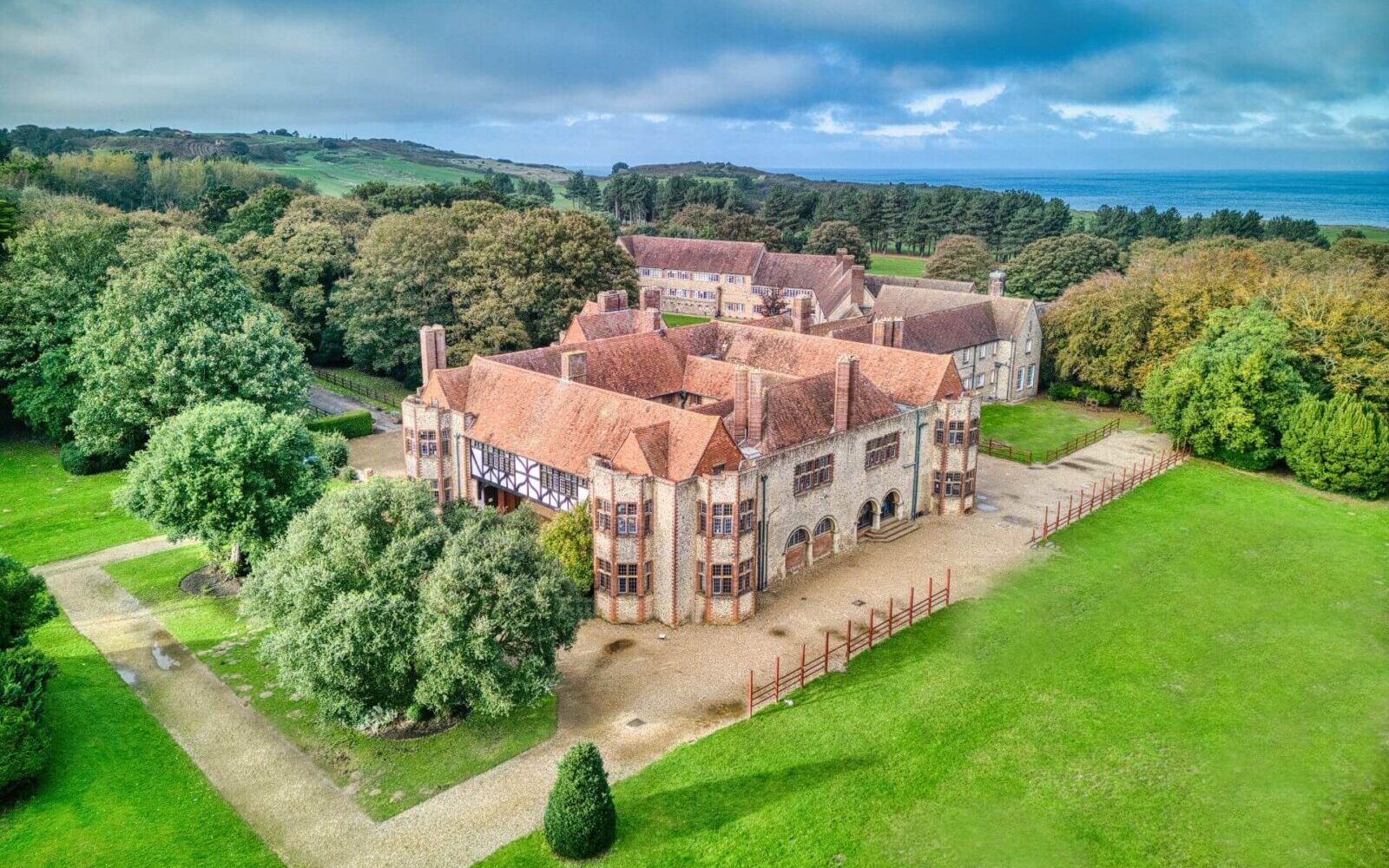
Educational trips are often judged by the activities on offer—but the environment itself can be just as influential. From grand halls to heritage estates, historic settings can shape how students feel, behave, and engage with learning in ways that modern classrooms simply can’t replicate.
This is especially true for historic buildings school trips in the UK, where architecture, atmosphere, and surroundings come together to create a more immersive and memorable experience.
In this blog, we explore how historic environments like Overstrand Hall can positively impact student wellbeing on school trips, and why heritage settings are becoming an increasingly valuable part of learning beyond the classroom.
How historic environments support student wellbeing
Historic environments can have a meaningful impact on student wellbeing on school trips, not just because of how they look, but because of how they shape behaviour, mood, and engagement.
Creating a sense of calm and space away from everyday pressures
Stepping into a historic setting often feels very different from a typical school environment. Large grounds, high ceilings, and quieter surroundings naturally reduce noise and overstimulation.
For students, this can:
- Lower stress levels and anxiety
- Help them feel more relaxed and settled
- Provide a break from busy, structured routines
This change of pace is particularly valuable for students who may find the classroom environment overwhelming, giving them space to reset and engage more comfortably.
Encouraging curiosity and imagination through immersive environments
Historic buildings are full of detail, character, and stories, which naturally invite exploration.
Instead of learning passively, students are placed in an environment where they begin to:
- Ask questions about the building’s history and purpose
- Imagine what life was like in a different time period
- Engage more actively with their surroundings
This type of curiosity-led engagement supports deeper learning while also making the experience more enjoyable and memorable.
Providing opportunities for reflection and mindfulness
Unlike fast-paced, screen-led environments, historic settings often encourage students to slow down and take in their surroundings.
Moments such as walking through grounds, exploring architecture, or simply being in a quieter space can:
- Support emotional regulation
- Encourage mindfulness and presence
- Give students time to process new experiences
These quieter moments are an important part of wellbeing, helping students feel more balanced throughout the trip.
Supporting engagement through real-world, tangible learning experiences
Learning in a historic environment allows students to connect knowledge to something physical and real.
Rather than abstract concepts, they can:
- See and experience history first-hand
- Interact with their environment in meaningful ways
- Link classroom learning to real-world contexts
This not only improves understanding but also increases confidence and participation, particularly for students who may struggle with traditional classroom learning styles.
Building confidence through new and meaningful experiences
Being in a new and inspiring environment can encourage students to step outside their comfort zones.
In a supportive setting, they may:
- Try new activities they wouldn’t usually attempt
- Speak up more in group discussions
- Engage more positively with peers and staff
Over time, these small moments contribute to increased self-confidence and a stronger sense of independence.
Discover Overstrand Hall with PGL
If you’re looking to bring together history, wellbeing, and active learning, Overstrand Hall offers a setting that delivers on all three.
Explore what makes this centre unique and how it supports enriching student experiences:
With its blend of historic architecture, coastal surroundings, and structured activity programmes, it provides a memorable environment where students can learn, grow, and thrive beyond the classroom.